


Pharmacy Jobs in South Carolina, Pharmacist Employers in South Carolina & Pharmacy Technician Jobs in SC | Columbia, Greenville, Spartanburg, Southern South Carolina, Florence, Charleston, Orangeburg, Beaufort, Conway, Anderson, Northern South Carolina, Greenwood, Rock Hill, Laurens, Lancaster, Eastern South Carolina, Myrtle Beach, Walterboro, Aiken, Gaffney, Sumter, Western South Carolina, Chester, York, Seneca, Clemson, Georgetown, South Carolina






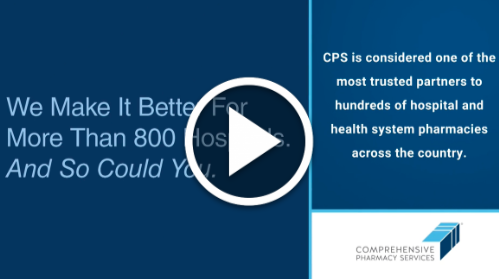
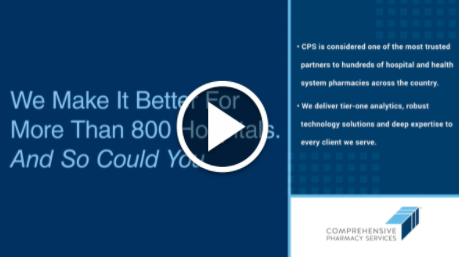
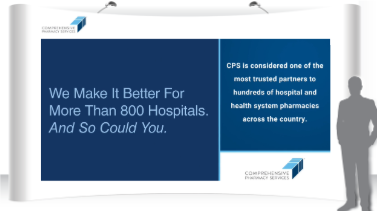
We're CPS, a pharmacy-management services provider to over 800 hospitals, acute-care, long-term acute care, behavioral health, and specialty hospitals throughout the U.S. and in Puerto Rico.
For over 50 years we have provided pharmacy service value through financial, operational, clinical, therapeutic, and regulatory expertise. We are growing at a breathtaking rate. As a CPS employee, you will discover, along with 2000+ other employees, that CPS is a company you'll be proud to grow with. For a list of our current openings, please visit the CPS Job Board.
Locations: South Carolina
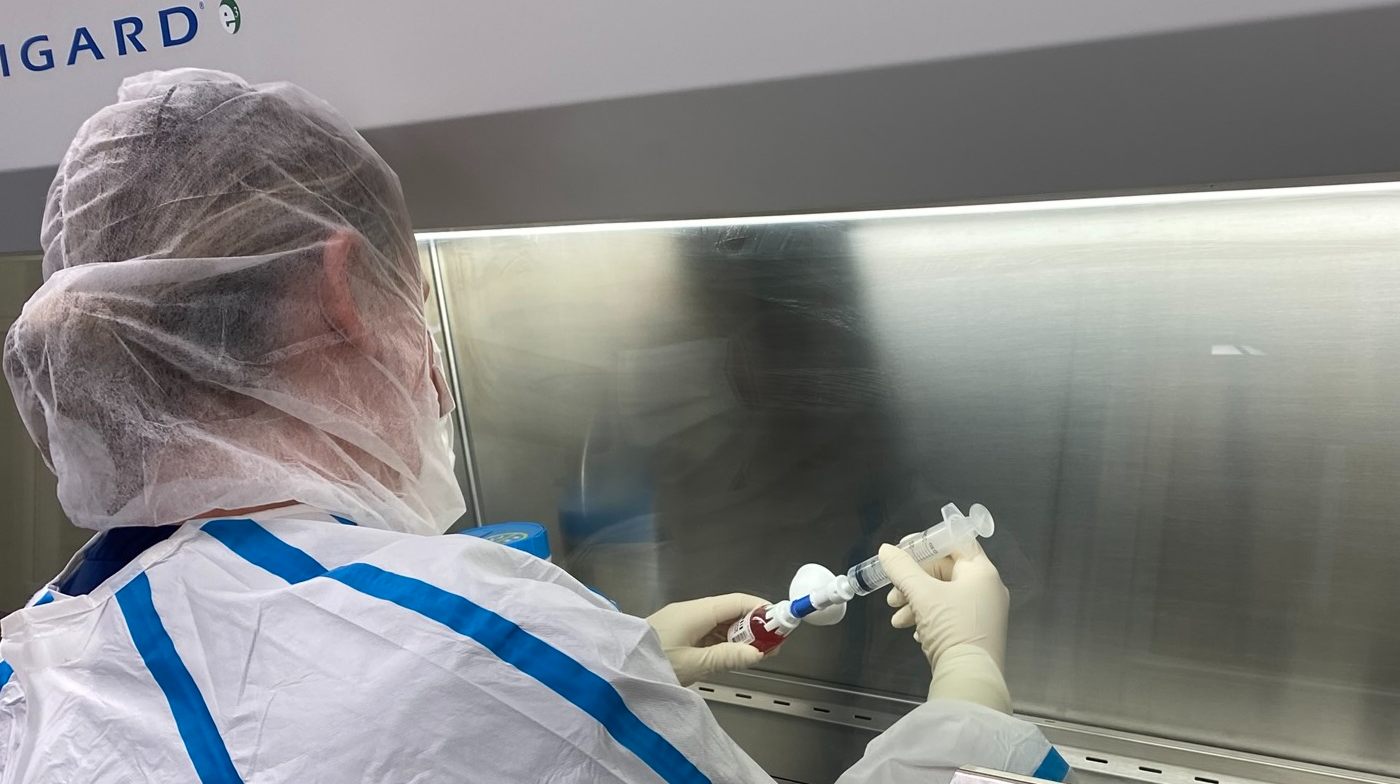
Practice Settings: Clinical Pharmacy, Consulting, Hospital (Inpatient), Hospital (Outpatient), Infusion / IV Compounding, LTC (Long Term Care), Management


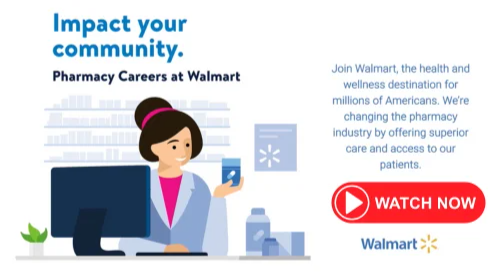
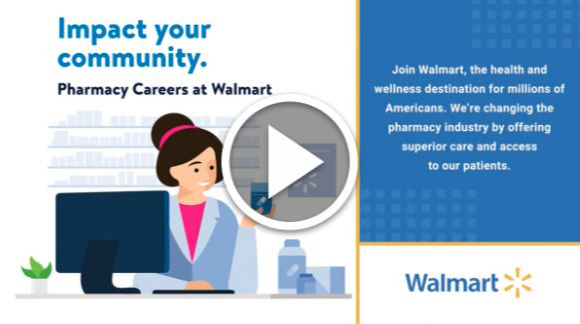
Your spark makes us Walmart.
At Walmart, we believe that quality healthcare is the foundation to a better life. To do this we provide our Pharmacists the tools and resources needed to deliver quality healthcare every day. In 1978, we opened our doors and began on an incredible journey into pharmacy operations. We knew we were going to offer the best possible service and products to our patients. That dedication soon grew into something much more.
Pharmacist Career Opportunities
Now, picture a pharmacy where you can have a flexible schedule. A place that offers multiple career paths and endless opportunities for professional growth. A practice that fills you with the pride of knowing that every day, you truly make a difference in the lives of your patients. Yet a place where you still have the time and tools to deliver the personal care each of your patients deserves. At the end of the day, we’re simply a team dedicated to helping others save money, so that they can live better, healthier lives.
Pharmacist Tech Career Opportunities
For nearly 30 years, we’ve remained at the forefront of innovative healthcare solutions. We help people save on prescriptions and other healthcare costs so they can live better. With over 4,000 locations, there’s a place for you – whether you’re an experience Pharmacy Technician or considering a new career. As a Walmart Pharmacy Technician, we’ll support you by developing your skills through on-the-job learning and an engaging, interactive training program to help you pass the national pharmacy certification exams (required in some states). Our mission is to save people money so they can live better, and the Pharmacy Division is one way to truly make a difference in people’s lives where it counts most – their health.
With over 4,000 locations and growing, our Walmart Pharmacies will provide you with some of the biggest opportunities on the market. For over 27 years, we’ve maintained our spot at the forefront of the industry’s technological advancements. Between our locations, offers of training and the chance for advancement, we provide opportunity for Pharmacists like no one else.
At the end of the day, we’re simply a team dedicated to helping others save money, so that they can live better, healthier lives.
Duties Include:
Dispenses prescriptions by following standard operating procedures; follows Medication Guidelines for receiving, filling, dispensing, logging, and maintaining loss prevention controls; ensures that Walmart policies and Federal and State laws and regulations in all prescription-related issues, including HIPAA, SOP, and QA, are followed; provides counseling on both prescription medications and over the counter medications per Company policy and as required by State and Federal law; ensures that all control drug policies and procedures as required by State, Federal, and Walmart guidelines are followed; performs trouble shooting functions for third party discrepancies and other prescription filling issues; verifies that all required pharmacy, Pharmacist and Technician licenses/registrations are current and valid as required by State, Federal, and Walmart guidelines.
Locations: South Carolina / Statewide
Practice Settings: Retail / Community (Chain)

Costco Wholesale has been rapidly expanding since our inception and we are still going strong - opening warehouses in new and established markets all over the globe. Costco Wholesale is the leading warehouse club and we regularly hire pharmacists to fill positions for pharmacy managers and full-time, part-time and relief/floating pharmacist positions. Costco ranks as one of the top 10 drug chains and we currently operate more than 480 pharmacies, employing 1,800 pharmacists. Costco offers excellent working conditions, incorporating the latest technology and some of the highest support staff levels in the industry, allowing you to practice pharmacy the way it was intended.
If no current openings exist, Costco will keep your information on file for future reference. Candidate follow-up is not necessary.
Locations: South Carolina
Practice Settings: Retail / Community (Chain)
The Kroger Co. operates multiple stores throughout South Carolina and we are always seeking skilled professionals to join our organization. Our Pharmacists enjoy a work environment focused on patient care, patient counseling and community involvement. Most importantly, as a member of our Pharmacy team, you will be working with Pharmacists that promote your ideas and encourage creativity. If you are seeking a rewarding career, quality of life, and competitive benefits, then The Kroger Co. is a good choice for you. We are one of the largest employers of Pharmacists in the United States (operating over 1750 pharmacies nationwide) and have career opportunities for all who desire a rewarding future! This is not just a job opportunity, but also the beginning of a career with unlimited possibilities.
Locations: Multistate, Statewide, South Carolina
Practice Settings: Retail / Community (Chain)
Harris Teeter (a division of The Kroger Co.) operates multiple stores throughout the state and we are always seeking skilled professionals to join our organization. Our Pharmacists enjoy a work environment focused on patient care, patient counseling and community involvement. Most importantly, as a member of our Pharmacy team, you will be working with Pharmacists that promote your ideas and encourage creativity. If you are seeking a rewarding career, quality of life, and competitive benefits, then The Kroger Co. is a good choice for you. We are one of the largest employers of Pharmacists in the United States (operating over 1750 pharmacies nationwide) and have career opportunities for all who desire a rewarding future! This is not just a job opportunity, but also the beginning of a career with unlimited possibilities.
Practice Settings: Retail / Community (Chain)

Nuclear pharmacy is an exciting and rapidly growing area of pharmacy. We operate multiple facilities nationwide. Although we prefer pharmacists that are currently Authorized Users, we are willing to train motivated non-nuclear pharmacists! GE Healthcare provides transformational medical technologies that are shaping a new age of patient care. GE Healthcare's expertise in medical imaging and information technologies, medical diagnostics, patient monitoring systems, disease research, drug discovery and biopharmaceuticals is dedicated to detecting disease earlier and tailoring treatment for individual patients.
Locations: Multiple States, Various Cities
Practice Settings: Nuclear Pharmacy


Don't see any South Carolina jobs you like? Sign up for RXinsider’s 411 Email Alerts and receive up-to-date announcements on employment opportunities, continuing education, drug launches, new products, surveys and more. This service is FREE, SIMPLE and CONFIDENTIAL. You can opt-out at any time. Click the "Envelope" icon to start receiving email alerts for nationwide and local pharmacy jobs throughout South Carolina.
Locations: Throughout South Carolina
Practice Settings: Academia, Clinical Pharmacy, Consulting, Hospital (Inpatient), Hospital (Outpatient), Industry / Pharma, Infusion / IV Compounding, LTC (Long Term Care), Managed Care / PBM / Mail Order, Management, MSL (Medical Science Liaison), Non-Traditional / Other, Nuclear Pharmacy, Retail / Community (Chain), Retail / Community (Independent), Specialty Pharmacy, Telepharmacy, Temporary Staffing, Travel Positions

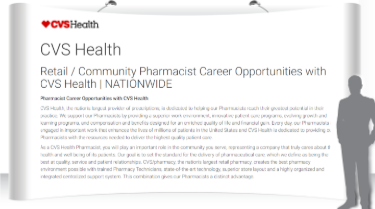
Pharmacist Career Opportunities with CVS Health
CVS Health, the nation's largest provider of prescriptions, is dedicated to helping our Pharmacists reach their greatest potential in their practice. We support our Pharmacists by providing a superior work environment, innovative patient care programs, evolving growth and learning programs, and compensation and benefits designed for an enriched quality of life and financial gain. Every day, our Pharmacists are engaged in important work that enhances the lives of millions of patients in the United States and CVS Health is dedicated to providing our Pharmacists with the resources needed to deliver the highest quality patient care.
As a CVS Health Pharmacist, you will play an important role in the community you serve, representing a company that truly cares about the health and well being of its patients. Our goal is to set the standard for the delivery of pharmaceutical care, which we define as being the best at quality, service and patient relationships. CVS/pharmacy, the nation's largest retail pharmacy, creates the best pharmacy environment possible with trained Pharmacy Technicians, state-of-the-art technology, superior store layout and a highly organized and integrated centralized support system. This combination gives our Pharmacists a distinct advantage.
We seek only the best Pharmacists to join our team and advance the quest to deliver outstanding health care every day.
Locations: Nationwide, South Carolina
Practice Settings: Retail / Community (Chain)

As part of our pharmacy team, Nuclear Pharmacy professionals know what it takes to make healthcare more efficient. Nuclear Pharmacy professionals provide solutions that encompass ever-changing needs of clients and the patient population. To ensure that they are satisfied in their roles, team members are supported, encouraged and given the tools that will guarantee success in the workplace.
Nuclear Pharmacy professionals at Cardinal Health thrive in an environment fuelled by teamwork and professional accountability. If you’re looking for a challenging yet fulfilling pharmacy career that allows you to enhance your skills and excel, search our Nuclear Pharmacy careers today.
Cardinal Health is an Equal Opportunity / Affirmative Action employer. All qualified applicants will receive consideration for employment without regard to race, color, religion, sex, national origin, disability or protected veteran status.
Locations: Nationwide, South Carolina
Practice Settings: Non-Traditional / Other, Nuclear Pharmacy

Pursue your interests, find your strengths and elevate your skills while serving your country in the U.S. Air Force. We provide unparalleled career options, growth opportunities and challenges to set you up for success and bring out the greatest potential in every one of our Airmen.
Locations: National / International
Practice Settings: Hospital (Inpatient), Hospital (Outpatient)

CompHealth has the best people to help you provide the best healthcare. Our experts in healthcare staffing deliver a rewarding experience that results in the best possible outcome for clients, healthcare providers and their patients.
A leader in temporary staffing and permanent placement for all allied health professionals. CompHealth offers allied healthcare professionals the resources they need and the job opportunities they want. We partner with and provide staffing services to major healthcare systems and networks, leading private groups and government agencies, in more locations nationwide.
CompHealth is the best single resource for healthcare providers seeking employment.
More options and services, beyond finding the right job.
Our experts respond to your needs with white papers, articles, webinars and more. The CompHealth job board, however, remains among the most robust in the industry, with daily uploads and specialty-specific information.
Contact your personal consultant about job opportunities and career resources in your specialty.
Locations: South Carolina, Nationwide
Disciplines: Nurse Staffing, Allied Health Staffing, Physician Staffing, Therapy / Rehab Staffing
Services: Temporary Staffing Services, Permanent Placement / Recruiting, Travel Assignments, Management & Consulting Services
• Employers Click Here for More on Services and Opportunities

CE Search Engine facilitates the development of professionals and adult learners by connecting them with relevant continuing education activities and life-long-learning opportunities. CE Search Engine is the only search engine dedicated exclusively to continuing education, and offers professionals a convenient tool to discover opportunities by subject, provider, or geographic location.
Locations: Online CE Activities Throught South Carolina
Practice Settings: Academia, Clinical Pharmacy, Consulting, Hospital (Inpatient), Hospital (Outpatient), Industry / Pharma, Infusion / IV Compounding, LTC (Long Term Care), Managed Care / PBM / Mail Order, Management, MSL (Medical Science Liaison), Non-Traditional / Other, Nuclear Pharmacy, Retail / Community (Chain), Retail / Community (Independent), Specialty Pharmacy, Telepharmacy, Temporary Staffing, Travel Positions
Disciplines: Nurse Staffing, Pharmacy Staffing, Allied Health Staffing, Physician Staffing, Therapy / Rehab Staffing
Services: Temporary Staffing Services, Permanent Placement / Recruiting, Travel Assignments, Management & Consulting Services
















The server is experiencing a problem at this time. Try again later.