



|
Quality RX Returns, Inc.
A Better Approach To Return Goods Processing
THE QUALITY RX RETURNS SOLUTION
In times of ever-increasing economic and regulatory pressures, the consequences of having inaccurate estimates in the timing and amount of product return and improper disposal of waste can cost retail and hospital pharmacies millions of dollars and incur unnecessary penalties for violations. The primary objectives of Quality Rx Returns are to effectively reduce a pharmacy’s cost of returns and maximize manufacturer credit benefits for returning pharmaceutical products.
Our services include the following features:
- Free shipping to Quality RX Returns
- Processing of all schedule II through V controlled substances
- Waste disposal solutions compliant with all federal and local regulations
- Computer-generated DEA Form 222 prepared on site
- Tamper evident pouches for class drugs
- Return goods data, comprehensive reports, forms & shipping labels
- Competitive processing fee structure for service
- Team of Field Technicians are licensed, bonded and insured employees of Quality Rx Returns
- Continued upgrading of database allows us to manage return good policies at the NDC level
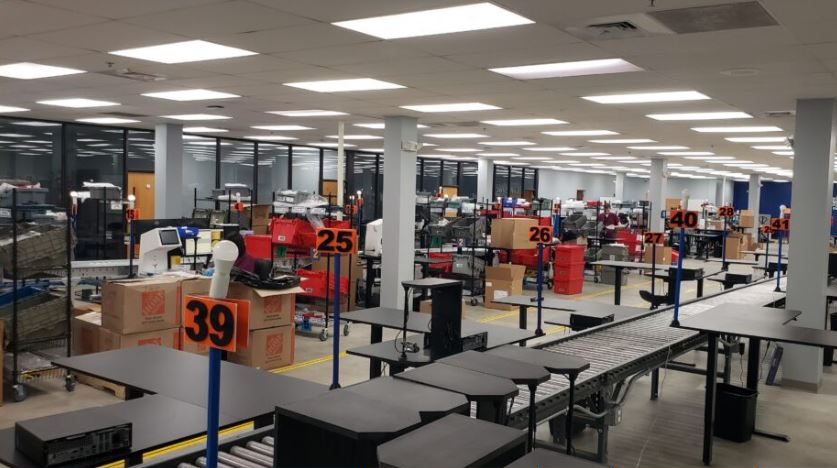
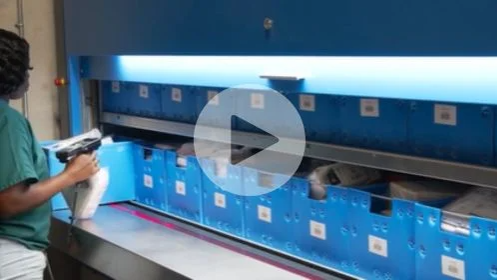
- Integrated bar code and laser sort technology offers maximum operating efficiencies
- Personalized customer service solutions tailored to meet client demands
|
|
quality rx returns and pharmaceutical waste management with pharmacy returns and reverse logistic solutions in hospitals with healthcare providers. DEA Form-222, Return Goods Processing on pharmaceutical waste management and disposal of waste with quality Rx Returns solutions.
|
Guaranteed Returns
The Industry's Choice for Pharmaceutical Reverse Distribution Services
Guaranteed Returns® founded the Pharmaceutical Reverse Distribution Industry in 1986. Since it’s inception, our philosophy has been to strive for excellence, innovation, and quality while providing the best possible Pharmaceutical Returns Management Programs to our customers. Guaranteed Returns® has built priceless relationships with our trade partners over several decades. Through these professional partnerships, our clients and partners realize reduced costs in managing product, data, and financial flows across the complex Pharmaceutical Reverse Distribution process.
Guaranteed Returns® experienced staff and national leadership continues improving industry standards through participation and compliance within trade related associations, and government regulatory agencies. Our dedication to process improvements, relationship building, and program innovation has enabled us to grow into the largest Pharmaceutical Reverse Distributor in the world.
Guaranteed Returns® provides services related to expired, recalled, damaged or overstocked pharmaceutical product returns for government, hospital, independent retail, chain-store and clinic pharmacies. Additionally, we provide direct return services for wholesalers and manufacturers. We are the only Reverse Distributor to have over 80 professional on-site service representatives located worldwide. Guaranteed Returns® state-of-the-art processing facilities are fully licensed and governed by state and federal regulatory agencies.
- First national pharmaceutical, OTC, HBC, & medical device reverse distributor with several decades of licensed and dedicated industry experience.
- Fully licensed/compliant with DEA, EPA, RCRA, FDA, DOT, OSHA, PDMA & all state boards of pharmacy, where required.
- Full systems integration opportunities via EDI (Electronic Data Interchange).
- VAWD certified (Verified Accredited Wholesale Distributor)
- Over 80 on-site service representatives worldwide.
- Industry’s most powerful online web reporting system with 100% accountability & inventory management tools.
- Established partnerships with over 1,000 crediting manufacturers, major group purchasing organizations, and all wholesalers.
- Automated indate product aging program and fully integrated recall processing and reporting.
- Servicing over 20,000 clients worldwide.
- Returns On The WebTM program: Enables customers to create an electronic inventory of outdates & print shipping label online.
- Two state of the art processing facilities: Equipped with automatic tilt tray sortation systems providing outstanding accuracy in processing.
- Providing waste disposal through high temperature incineration that turns waste into useful energy while preserving our environment.
|
|
Pharmaceutical Waste Management Services, JAHCO, JACO and FDA approved
|
Waste Management Healthcare Solutions
Think Green - Think Waste Management
WM Healthcare Solutions is committed to being the customer advocate, charting the course through the maze of surprisingly complicated issues in order to maximize environmental improvements while providing overall cost effective solutions. WMHS‘s charter dictates that we provide the best solution for the customer whether that’s working with our own network of internal suppliers or third-party vendor-partners.
Our job, as the waste management experts, is to help you leverage your total environmental program costs across a broad range of programs to not only be in compliance but takes a "beyond compliance" approach that strives for environmental excellence. We understand the waste industry and track emerging issues -- it’s what we do best so you can do what you do best - provide top-notch patient care.
Single source solution for all healthcare waste streams
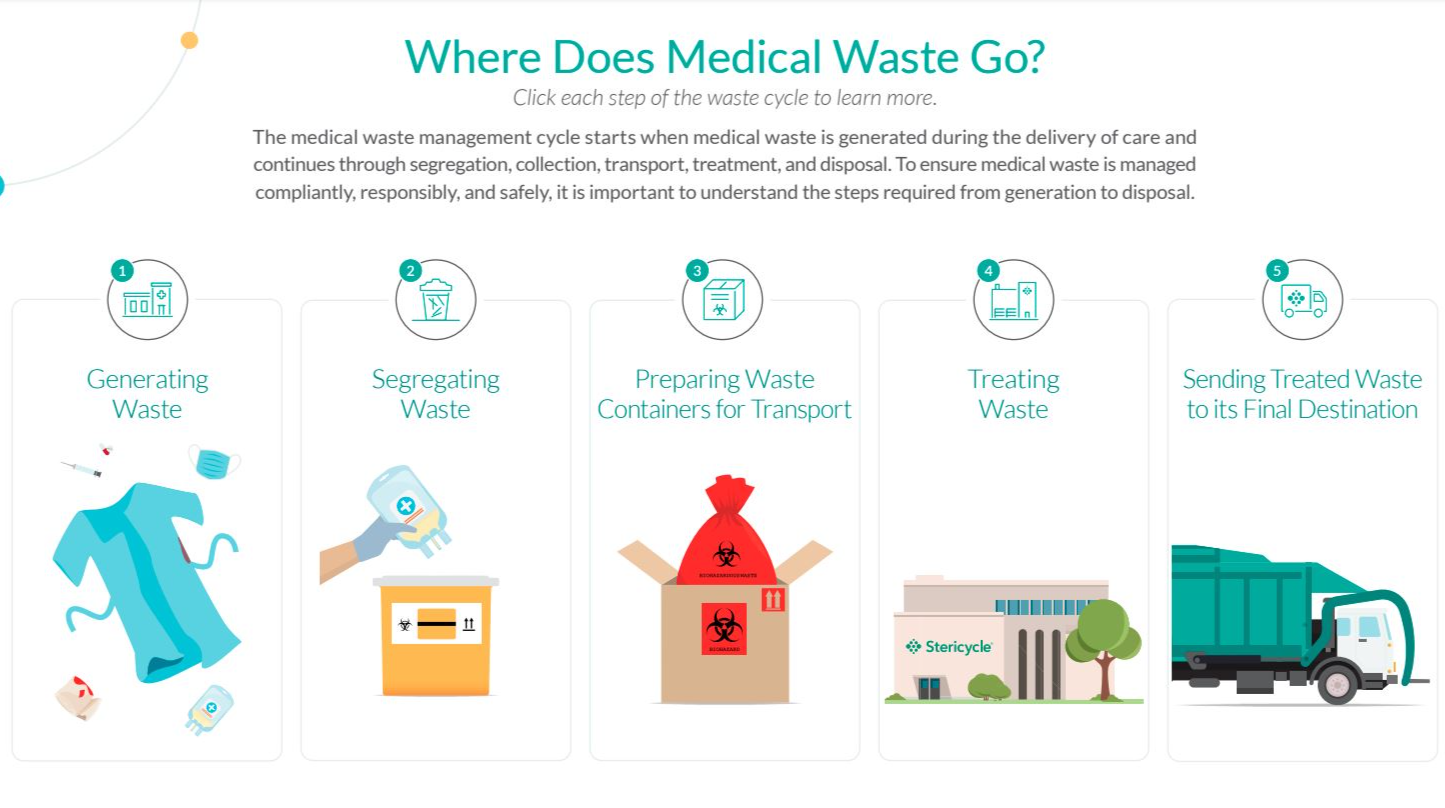
WM Healthcare Solutions (WMHS) is a special services division of Waste Management, Inc. that provides a complete range of sustainable and cost-effective “managed waste and environmental solutions” specifically designed for the healthcare industry. WMHS aims to be the single source provider of operational and consulting services required to handle healthcare’s complex waste streams from compliance, safety, and risk assessments related to waste management to in-house operational logistics, to market assessment and collection and processing for a variety of waste streams.
We offer the following services:
- Medical waste disposal
- Pharmaceutical waste management services
- Incineration
- Universal waste (bulbs, batteries, electronics)
- Solid waste
- Recycling
- Regulated medical waste
- Hazardous chemical waste
- Construction and Demolition waste
- Low-level nuclear medical waste
- Beneficial reuse – Managing excess equipment and supplies
- Waste data and financial analysis
- Emergency preparedness planning
- Waste assessments and consulting services
- Education and training
- Contracted in-house services
|
|
medical waste disposal pharmaceutical waste management services incineration universal waste solid waste recycling hazardous chemical waste management healthcare green recycle
|
Clean Harbors Environmental Services
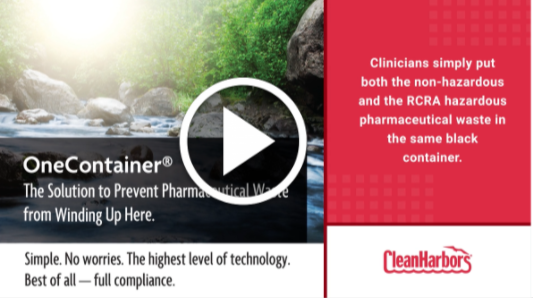
Clean Harbors provides comprehensive collection and disposal services for safe pharmaceutical waste management.
Pharmaceutical Waste Characterization - We provide a comprehensive review of hospital pharmacy products and compounded formulas. Our formulary characterization accurately determines EPA, RCRA, and DOT requirements for each National Drug Code (NDC) product. Pharmaceutical waste characterization is particularly critical for chemotherapy agents, U-listed and P-listed hazardous waste.
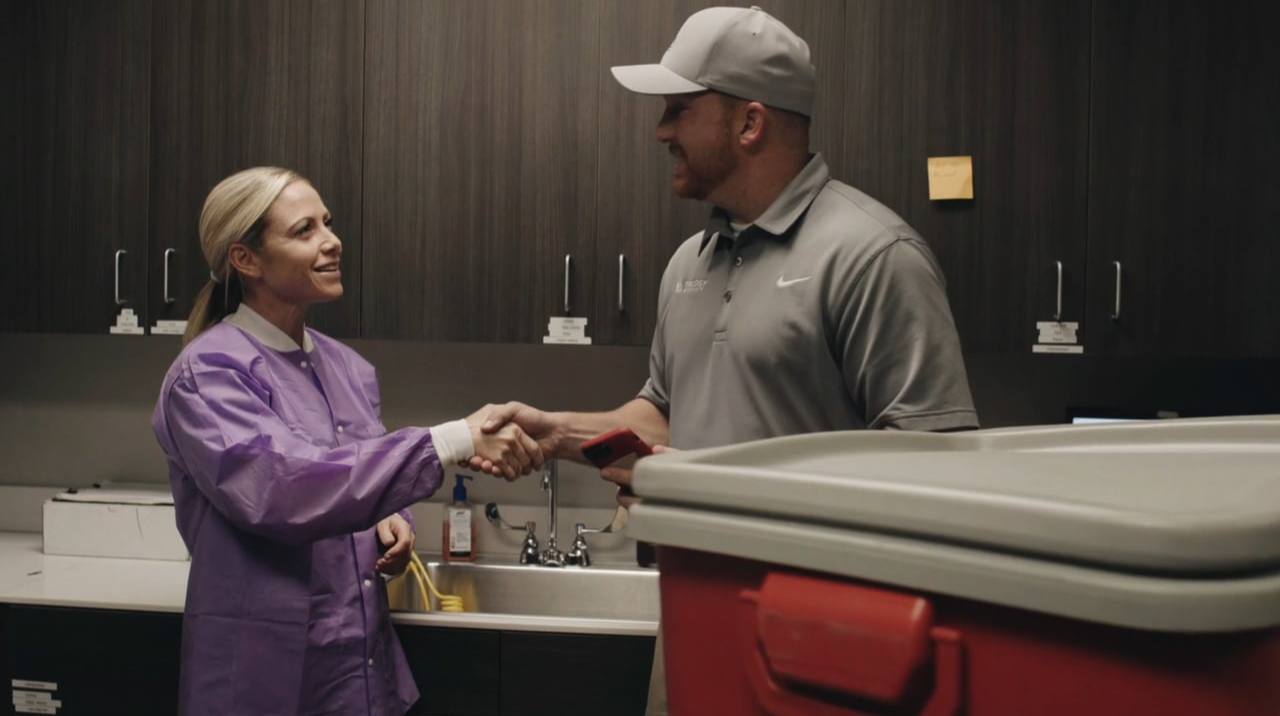
Satellite Accumulation Area Collection - Clean Harbors provides pharmaceutical waste collection container systems in the pharmacy and patient care areas. Disposable and reusable containers are used to properly separate pharmaceutical waste from biological or solid waste. Clean Harbors manages the collection and replacement of the pharmaceutical waste management containers on their scheduled service visits.
Main Accumulation Area Management - Clean Harbors properly segregates all pharmaceutical waste to comply with appropriate DOT requirements, and packages the pharmaceutical waste products for transport. All of the necessary regulatory documentation will be administrated by Clean Harbors.
Transportation & Disposal - Clean Harbors service vehicles pick up your pharmaceutical waste and transport it to company owned and operated facilities.
H1N1 Vaccine Incineration Services
Clean Harbors provides turnkey H1N1 Vaccination Incineration Services for healthcare facilities including hospitals, clinics, urgent care, and physicians’ offices. With a shelf life of 18 to 24 months, H1N1 vaccine inventories dated at the end of 2008 and early 2009 are now requiring proper disposal by incineration. Since outdated vaccines do not have value, they are not managed through Reverse Distributors.
Hazardous Waste Handled
U-Listed Waste - Chemotherapy agents, including chlorambucil, cyclophosphamide, daunomycin, diethylstilbestrol, melphalan, mitomycin C, streptozotocin, and uracil mustard. Other non-antineoplastic pharmaceuticals including reserpine, selenium sulfide, resorcinol, saccharin, and chloral hydrate
P-Listed Waste - Arsenic trioxide, epinephrine, nicotine, nitroglycerine, physostigmine, physostigmine salicylate, and warfarin above 0.3%
D-Listed Waste - Ignitable, toxic, corrosive and reactive waste
Chemotherapy Waste Disposal
Clean Harbors provide safe and complete disposal of chemotherapy agents. U-Listed waste including chlorambucil, cyclophosphamide, daunomycin, diethylstilbestrol, melphalan, mitomycin C, streptozotocin, and uracil mustard and other non-antineoplastic pharmaceuticals, such as reserpine, selenium sulfide, resorcinol, saccharin, and chloral hydrate materials are easily handled through Clean Harbors’ network of waste disposal facilities.
DEA Approved Reverse Distributor
As a registered DEA Pharmaceutical Reverse Distributor, Clean Harbors provides an effective solution for managing Schedule I-V Controlled Substances from the initial pickup to transportation and complete destruction. Clean Harbors assumes full chain-of-custody ownership of these regulated substances at the customer site. We complete the administration of agency required shipping and receiving documentation, and as a cost savings, eliminate the need for a customer to witness the destruction of the controlled substances.
We complete all the various forms and paperwork including, but not limited to, DEA Form 222 (for Schedule I and II) or Form 41 (for Schedule III, IV, V substances).
CleanPack® Laboratory Chemical Packing
Clean Harbors CleanPack® Laboratory Chemical Packing Services provide proper recognition, handling, packaging, transportation and disposal of laboratory chemicals for healthcare facilities. We also perform laboratory relocations, closures and cleanouts.
Clean Harbors can manage virtually any chemical found in a laboratory environment including
- RCRA, non RCRA
- TSCA, DEA, radioactive, mixed wastes and universal wastes
- Biological, etiological
- Compressed gas and cylinders
- Toxic, flammable, oxidizer, organic peroxide, and corrosive materials
- Pyrophoric, gases, aerosol, unknown, reactive, explosive, and shock sensitive materials
- Ethers, THF, dioxane, and sodium azide
|
|
waste management clean harbors clean pack transportation disposal h1n1 vaccine disposal
|
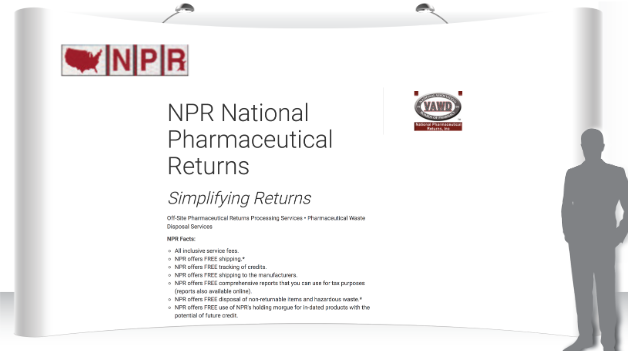
NPR (National Pharmaceutical Returns)
Offering cost effective pharmaceutical waste disposal consulting and services
Pharmwaste Consultation
- Rx Waste Characterization – Full formulary reviews of pharmaceutical waste streams. In addition to identifying EPA hazardous waste, Best Management Practices (BMP) wastes are also identified. Optional BMP waste includes: Chemo Agents, OSHA and NIOSH hazards, Endocrine Disruptors, DEA Controls, MSDS Indications, Carcinogens, P and U-Listed combination waste, Regulated Medical Waste.
- Pharmaceutical waste consulting services – Experienced personnel specializing in setting up programs for pharmaceutical waste management.
Pharmwaste Disposal
- Non-RCRA waste disposal (limited RCRA)
- Waste-To-Energy incineration
- DEA Scheduled drugs (CI-V)
- No extra charge for DEA form 222
- Online interactive control inventory
- VAWD accredited
- LQG certified
- Compliant with: DEA, EPA, OSHA, DOT and State Boards
- Servicing facilities: Retail and Hospital pharmacies, Veterinary, Dr. offices, etc.
|
|
Pharmaceutical Waste Management Services, JAHCO, JACO and FDA approved
|
Clean Harbors
Do you know what the new pharmaceutical regulations are?
Clean Harbors does and can help keep you in compliance. Read More...
|
|
|
Daniels Sharpsmart Inc
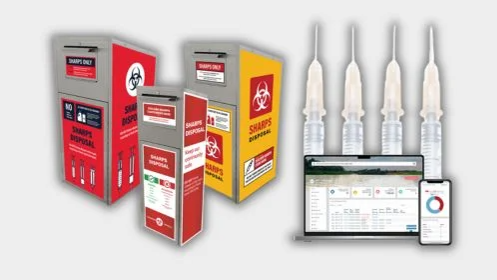
It is estimated that over 400,000 people suffer the trauma of a sharps injury each year in American healthcare facilities. Daniels is committed to reducing this number through safer sharps management systems.
Daniels has caused a paradigm shift by creating the Sharpsmart system. This unique, patented system utilizes technologically-advanced materials and components in the construction of its reusable sharps collectors |
 |
|
 |
Wound Care
Provided by: Biologix Solutions, LLC
Upon completion of this course, you will be able to:
Identify the three phases in the healing of skin wounds.
List at least five things that hinder wound healing.
Summarize the steps in caring for an acute wound.
Describe the proper way to cleanse a wound.
Discuss the various ways to close an acute wound.
Explain the signs and symptoms of an ... |
 |
Sonographic Assessment of the Umbilical Cord
Provided by: Institute for Advanced Medical Education
Target Audience: Physicians, sonographers and others who perform and/or interpret obstetrical ultrasound.
System requirements: In order to complete this program you must have a computer with a recent version of Internet Explorer or Netscape, and a printer, which is configured to print from the browser.
For any questions or problems concerning... |
 |
Adverse Event Reporting: What, When, Who & How : AAOS Biomedical Engineering Committee
Provided by: American Academy of Orthopaedic Surgeons
After completing this CME module, participants will be able to
1. Summarize the purpose of the Safe Medical Devices Act of 1990.
2. Define what is meant by an "adverse event" according to the Safe Medical Devices Act.
3. Identify when an adverse event should be reported under the Safe Medical Devices Act, how such events should be rep... |
 |
Getting Started in Preclinical Imaging
Provided by: SNM Advancing Molecular Imaging and Therapy
Getting Started in Preclinical Imaging... |
 |
Ethical Legal and Social Issues: Brief Case Studies in Genetics
Provided by: Harvard Medical School
Acknowledgement: This course is supported by educational grants from Celera and the Applera Charitable Foundation.
This course presents three brief patient scenarios that highlight ethical challenges presented by advances in genetic testing. While specific topics include an introduction to the Genetics Information and Nondiscrimination Act, dire... |
 |
Stereotactic Breast Biopsy Mini-Symposium
Provided by: Institute for Advanced Medical Education
Stereotactic Breast Biopsy Mini-Symposium is a multimedia program on the use of stereotactic tables for breast biopsy. The five sections that make up the program employ a combination of audio, slides and written transcript. The content of this program can be viewed for free and IAME's standard fees apply for those who wish to receive CME credits.
... |
 |
Oral and Extraoral Plasmablastic Lymphoma: Similarities and Differences in Clinicopathologic Characteristics
Provided by: American Society for Clinical Pathology
Upon completion of this activity, you will be able to:
* describe the morphologic features of plasmablastic lymphoma (PBL) presenting in oral and extraoral sites.
* discuss the utility of immunohistochemistry in the diagnosis of PBL, and its utility for differentiation between PBL presenting in oral and extraoral sites.
* discuss the utilit... |
 |
34th Annaul Neonatology: The Sick Newborn
Provided by: Georgia Health Sciences University
PURPOSE
This course will update neonatal health care professionals on basic and complex neonatal issues. Workshops on PICC lines and a STABLE® course are featured. The course will benefit both the health care professional new to neonatal-perinatal medicine and the experienced practitioner.

OBJECTIVES
This course should prepare course partici... |
 |
Focus On: Trauma in the Obstetric Patient: A Bedside Tool
Provided by: American College of Emergency Physicians
After reading this article, the physician should be able to:
* Practically apply trauma assessment and management principles to the pregnant patient.

* Understand the physiologic basis for variations of trauma care for the pregnant patient.
* Utilize a practical bedside tool to assist in assessment and management of these patients.... |
 |
MRI of Shoulder Instability, the Labrum, and Beyond
Provided by: PROSCAN Imaging Education Foundation
The ProScan Imaging Education Foundation's all-new Professional MRI Series provides a comprehensive educational program that encompasses a broad survey of up-to-date radiological knowledge in the neurological and musculoskeletal realms. Lectures address in-depth discussions of neuroradiology of the brain, spine, head and neck, and pediatric imaging... |
 |
Emergency Cardiac Care Guidelines
Provided by: Wild Iris Medical Education
Upon completion of this course, you will be able to:
* Discuss how the physiological differences in the phases of cardiac arrest drive the appropriate treatments for each phase.
* Use the principles of patient assessment to guide treatment decisions.
* Describe the appropriate care of a patient in a pulseless arrest.
* Relate factors to consi... |
 |
Medication Safety
Provided by: Pfiedler Enterprises
The Institute of Medicine’s (IOM) 1999 report, To Err Is Human: Building a Safer Health System, stated that medication-related errors were a significant cause of morbidity and mortality, accounting “for one out of every 131 outpatient deaths, and one out of 854 inpatient deaths.” Building on this work and previous IOM reports, the IOM put for... |
 |
The Impact of New-Onset Postoperative Atrial Fibrillation on Mortality After Coronary Artery Bypass Grafting
Provided by: American Association for Thoracic Surgery
Learning Objectives
After reading this article, the learner should be able to:
* understand the impact of new-onset postoperative atrial fibrillation on early, late, and overall mortality after CABG surgery
* differentiate independent predictors of early, late, and overall mortality after CABG surgery
* appreciate the impact of posto... |
 |
Navigating the Management of Chronic Pain:
A Pharmacist's Guide
Provided by: Power-Pak C.E.®
Provide the pharmacist with practical information to support the assessment and management of patients with chronic pain.... |
 |
Peripheral Nerve Catheters After Shoulder Surgery: Do They Improve Functionality?
Provided by: American Academy of Orthopaedic Surgeons
After completing this CME module, participants will be able to
1. Identify the indications and contraindications for using a continuous interscalene brachial plexus block in a patient undergoing shoulder surgery.
2. Describe the general technique for performing an interscalene brachial plexus block, and identify the various methods used f... |
 |
Scintillation Cameras (CA Scope: NI)
Provided by: SNM Advancing Molecular Imaging and Therapy
Scintillation Cameras (CA Scope: NI)... |
 |
MRI of the Brain Posterior Fossa Masses, Part II
Provided by: PROSCAN Imaging Education Foundation
The ProScan Imaging Education Foundation's all-new Professional MRI Series provides a comprehensive educational program that encompasses a broad survey of up-to-date radiological knowledge in the neurological and musculoskeletal realms. Lectures address in-depth discussions of neuroradiology of the brain, spine, head and neck, and pediatric imaging... |
 |
Focus On: The Observation Option for Acute Otitis Media in the Emergency Department
Provided by: American College of Emergency Physicians
After reading this article, the physician should be able to:
* Discuss the diagnostic criteria for acute otitis media (AOM).
* Understand the natural course of AOM.
* Review recent studies that have evaluated the observation option in the emergency department.
* Consider the use of acoustic reflectometry when appropriate.
... |
 |
Navigating the Management of Chronic Pain: A Pharmacist's Guide
Provided by: Power-Pak C.E.®
Provide the pharmacist with practical information to support the assessment and management of patients with chronic pain. Identify different classes of medications used in the management of chronic pain. Analyze the pros and the cons of pain medications with respect to safety and tolerability, efficacy, and ease of use. Determine strategies for ind... |
 |
Medical Home CME Series: #2 Communication and Co-management Between Specialty Providers
Provided by: American Academy of Pediatrics
By the end of this teleconference the participants will be able to:
* Discuss the importance of primary and specialty care collaboration in the provision of comprehensive, family-centered care provided in the medical home.
* Describe the benefits of enhancing communication in the continuity between health systems.
* Identify 3 prac... |
 |
Effects of Secondhand Smoke Exposure on Children's Health
Provided by: University of Kentucky College of Medicine
Objectives
1. Discuss lung development & the effects of Secondhand Smoke (SHS) exposure
2. Review the life cycle of smoking
3. Discuss the scope of the problem of SHS on children in Kentucky
4. Review the effects of SHS on children & the long term complications
... |
 |
Sonographic Evaluation of Ectopic Pregnancies
Provided by: Institute for Advanced Medical Education
Course: Sonographic Evaluation of Ectopic Pregnancies
Target Audience: Physicians, sonographers and others who perform and/or interpret OB ultrasound.
Objectives
After completing this course, the participant should be able to:
* Identify the risk factors associated with an ectopic gestation.
* Summarize the medical and surgical man... |
 |
Radiation Characterization and Quantities (CA Scope: R)
Provided by: SNM Advancing Molecular Imaging and Therapy
Radiation Characterization and Quantities (CA Scope: R) ... |
 |
Tapentadol IR: A Gain for Pain?
Provided by: The Collaborative Education Institute
Learning Objectives
1. Describe the mechanism of action of tapentadol immediate release (IR).
2. Determine the appropriate dose and dosing schedule for tapentadol IR.
3. Recognize tapentadol IR's contraindications, warnings and precautions.
4. Identify adverse effects that have been associated with tapentadol IR.
5. Discuss potential drug-drug... |
 |
HIV/AIDS: A Primer for Pharmacists
Provided by: U.S. Pharmacist
After completing this activity, the participant should be able to:
1. Explain the life cycle of HIV, including tropism.*
2. Identify means of transmission and risk factors.*
3. Explain HIV testing, including when it is indicated.*
4. Describe the antiretroviral therapy (ART) agents from each of the five classes.*
5. Evaluate a patient... |
 |
Skin Cancers
Provided by: NetCE
The key to reducing the morbidity and mortality associated with skin cancers is prevention and early detection. Family physicians and others involved in the primary care of adults and children are in a unique position to routinely evaluate patients for skin cancer as well as to educate their patients about self-examination and preventive measures. ... |
 |
Pathologic T0N1 Esophageal Cancer After Neoadjuvant Therapy and Surgery: An Orphan Status
Provided by: The Society of Thoracic Surgeons
Learning Objectives
After reading this article, the learner should be able to:
* describe clinical characteristics unique to the ypT0N1 esophageal cancer group
* characterize the discrepancy between clinical staging and pathologic staging after completion of induction therapy for esophageal cancer
* describe estimated survival for pa... |
 |
Pain Management in Long-Term Care: Practical Considerations and New Directions
Provided by: American Society of Consultant Pharmacists
Upon completion of this knowledge-based activity, the participant should be able to:
1. Summarize practical strategies for recognizing and assessing pain in the long-term care population,particularly for cognitively impaired residents.
2. Evaluate the efficacy and safety of pharmacological pain management treatments to minimize adverse events... |
 |
VISICU Critical Care Review -February 2010
Provided by: American Board of Quality Assurance And Utilization Review Physicians
Course Description & Objectives
* Review the issue of H1N1 influenza of severity requiring hospitalization
* Review the issue of the subset of hospitalized H1N1 influenza patients requiring ICU care.
* Review the characteristics of H1N1 patients requiring ICU care
* Review the care administered to H1N1 patients admitted to... |
 |
Adults or Big Kids: What Is the Ideal Clinical Environment for Management of Grown-Up Patients With Congenital Heart Disease?
Provided by: The Society of Thoracic Surgeons
Learning Objectives
After reading this article, the learner should be able to:
* learn the percentage of congenital heart operations that are required, according to this study, to qualify a surgeon as a congenital heart surgeon
* recognize that the surgeon-practice setting plays a role in in-hospital mortality, which may be dependant on ... |
 |
|
|